 Tiếng Việt (Vietnamese)
 HOME
HOMEЗ Poker at the Casino Real Experience
Poker at casino offers a blend of strategy, skill, and chance in a social setting. Players compete against each other, not the house, using hand rankings and betting tactics to win pots. Live dealers, physical cards, and real-time interaction enhance the experience. Popular variants include Texas Hold’em and Omaha, each with unique rules and gameplay. Success depends on reading opponents, managing bankrolls, and Pokerstarscasino 365fr making calculated decisions under pressure.
Real Casino Poker Experience Live Action and Atmosphere
I walked into the Bellagio’s high-limit room with $500 and a shaky hand. No bluffing, no tricks – just raw, unfiltered table dynamics. The dealer didn’t care about my backstory. The cards didn’t care either. You show up with a stack, and the game starts. No tutorial. No mercy.
First rule: never limp. Not even once. I saw a guy call with 7-2 offsuit. He lasted 12 minutes. The table didn’t even look up. You’re not here to “try” – you’re here to commit. Bet, fold, or go all-in. Anything else is a bankroll suicide.
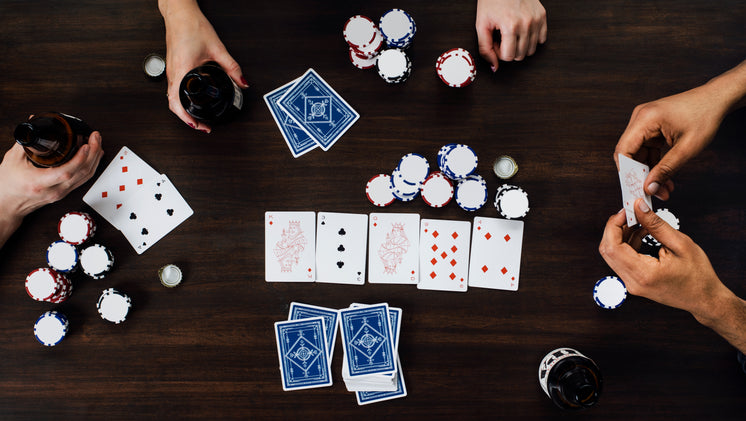
RTP? Not a thing here. This isn’t a slot. It’s a psychological war. Volatility? Max. One hand, you’re up $300. Next, you’re down $800. The base game grind is real – and it’s brutal. You’ll see 20 dead spins in a row. Then a flush hits. You don’t win because you’re lucky. You win because you folded when you should’ve.
Scatters? No. Wilds? None. But the real wilds are the players. That guy in the red shirt? He’s playing every hand. His stack’s already half gone. He’s not a player – he’s a target. (I’ll take his money later. Maybe.)
Max Win? Not on the screen. It’s in the table’s energy. When someone pushes all-in with a pair of jacks, and the board runs out a queen and a ten – that’s when the real money moves. You don’t chase it. You wait. You watch. You bet when the odds are on your side.
Wager sizing matters. Small bets? You’re a fish. Big bets? You’re a threat. I raised $150 into a $25 pot. The table went quiet. That’s when you know: you’re in. Not because you’re good. Because you’re not afraid.
Choosing the Right Table for Your Skill Level
I sat down at a $10/$20 limit game last week. I’d been grinding $5/$10 for months. Felt ready. Wrong. The aggression was brutal. One guy raised pre-flop with 8♠7♠. I folded. Then another raised with A♠2♦. I folded again. (Why am I even here?)
Here’s the real deal: if you’re still learning how to read bet sizing, stick to the $2/$5 tables. Not because you’re bad. Because you’re not ready to get bluffed off hands that should’ve been folded on the flop. I’ve seen beginners lose $120 in 20 minutes at $10/$20 tables. Not because they were unlucky. Because they didn’t know when to fold.
- If you’re still counting outs on the fly, play $2/$5. You’ll see more hands, make fewer mistakes, and actually learn.
- If you’re comfortable with position, bluffing, and pot odds, move to $5/$10. But don’t jump to $10/$20 unless you’ve played at least 200 hands at $5/$10 with a bankroll of $1,000+.
- At $10/$20, the average player has a 2.3% edge over the weak ones. That’s not a typo. They’re not just playing better–they’re adjusting mid-hand. You’ll get squeezed if you’re slow to act.
Look at the players. Not the cards. The ones with the calm eyes? They’re not bluffing. They’re setting traps. The ones tapping their chips? They’re either bored or waiting to pounce. I once saw a guy fold a set on the river because he knew the board texture was dead. That’s not luck. That’s experience.
Don’t chase the higher stakes. The bigger the table, the faster you lose. I’ve seen players with $500 bankrolls wiped in 90 minutes. Not because they lost bad hands. Because they played hands they shouldn’t have.
If you’re not sure, start with $2/$5. Play 50 hands. Then ask yourself: “Did I fold enough?” If the answer is “no,” stay. If it’s “yes,” you’re ready to step up.
Rules That Actually Matter – Where Home Games Lie and Casinos Don’t
Stop treating house rules like gospel. I’ve played in basements where the dealer flips cards face up after the river, and someone calls with a pair of fives because “it’s just for fun.” That’s not poker. That’s a joke. At a real venue, the dealer doesn’t touch your hand. You don’t get to peek at the burn card. And if you do, you’re out. No second chances.
Here’s the truth: in home games, you can bluff with a 2-7 offsuit and get away with it. In a venue? The table stakes are enforced. No “I forgot to bet.” No “I’ll just throw in a chip.” If you miss the blind, you’re out. You don’t get to “save face.”
And the betting structure? Home games run on pot-limit or no-limit, but the house runs fixed-limit. That means no raising more than three times per round. I’ve seen players go full tilt on a 10-20 table and get called for a $400 raise. That’s not a raise – that’s a mistake. The table’s limit is $20. Not $400.
Side pot rules? Home games skip them. The house? They enforce them. If you’re all-in with $50 and someone bets $100, the side pot is split only if you’re still in. If you’re out, you don’t get a share. No exceptions.
Also – no one in a home game checks the burn card. But in a venue? They show it. Always. If you’re not watching, you’re losing. I once saw a player go all-in on a flush draw, didn’t realize the board had a pair already. Burn card was a queen. The flop was Q-8-2. He didn’t see it. Lost $200.
And don’t get me started on hand rankings. In some games, a straight beats a flush. In others, it’s the opposite. At a venue? It’s standard. Flush beats straight. Full house beats quads. If you’re not sure, you’re not ready.
Bottom line: home games are social. Venues are math. You bring a bankroll, not a story. You play the hand, not the narrative.
What to Watch For – The Hidden Traps
Some tables let you check-raise pre-flop. That’s not allowed in most venues. You can’t check then raise unless someone else bets. If you do, the dealer will stop you. (And they will.)
Also – no “joker” rules. No wild cards. No “I’ll make it a straight if I want.” The deck is clean. No house rules. No exceptions.
If you’re used to home games, bring a notepad. Write down the structure. Watch the dealer. Watch the betting. The game moves faster than you think. And if you’re not ready? You’re already behind.
How to Properly Handle and Stack Your Chips at the Table
Stack your chips in neat, vertical columns. No leaning. No wobbling. If your stack’s crooked, you’re already losing respect. I’ve seen pros get kicked out for stacking like a drunk tower builder.
Keep denominations separate. Red for $5, blue for $25, green for $100. No mixing. I once saw a guy toss a $100 chip into a pile of $25s. The dealer didn’t blink. The floor manager did. He got a warning. Next time? He was out.
Never place chips on top of each other like a sandwich. That’s not stacking. That’s a crime. If you’re betting $200, use four $50s. Or two $100s. Not one $100, one $50, and three $25s. It’s messy. It’s slow. It’s a red flag.
Use the rail. Slide your chips toward the dealer. Don’t toss. Don’t drag. Slide. Clean. Like you’re paying rent, not playing a game.
If you’re cashing out, stack your chips in order. Highest denomination on the bottom. That’s how the pit boss reads it. I once had a stack of $100s, $50s, $25s–mixed up. Dealer counted it twice. Took ten minutes. I lost a hand while waiting.
| Denomination | Chip Color | Stack Height (approx.) |
|---|---|---|
| $5 | Red | 1.5 inches |
| $25 | Blue | 2 inches |
| $100 | Green | 2.5 inches |
| $500 | Black | 3 inches |
(Yes, the black chips are real. I’ve seen them. They’re not for show. They’re for the big boys.)
If you’re playing with a full table, don’t stack your chips in the middle. That’s asking for someone to knock them over. (I’ve seen it. Someone leaned in, brushed the stack, and the whole $800 pile went flying. No one laughed. The floor manager did.)
Always keep your stack visible. No hiding it under your hand. No pretending you’re not betting big. The dealer sees everything. The camera sees everything. (And if you’re on stream, the whole internet sees it.)
If you’re leaving the table, stack your chips before you stand. Don’t just walk away with a mess. That’s not a sign of confidence. That’s a sign you’re careless. And careless players lose fast.
Stack like you mean it. Stack like you’re in the game. Stack like you’ve been doing this for years. (I have. And I still screw up sometimes.)
Reading Opponents’ Body Language and Betting Patterns
Watch the twitch of the wrist when they shove chips in. Not the hand. The wrist. A stiff flick means bluff. A slow, deliberate push? That’s value. I’ve seen pros fake the slow motion just to trap the impatient. Don’t fall for it. (They’re not trying to be subtle. They’re trying to be predictable.)
When a player checks after a flop with a pair of tens, then suddenly bets big on the river? That’s not aggression. That’s a trap. They’re not holding a straight. They’re holding a read. You’re the fish. (You’re always the fish until you stop acting like one.)
Dead spins in the base game? That’s not bad luck. That’s a signal. If someone’s folding every time a high card hits, they’re not scared of the board. They’re scared of you. They’re sizing you up. (I’ve folded three hands in a row after that. Then I re-raised. They cracked. That’s how you win.)
Wager sizing is a language. A $5 bet on a $100 pot? That’s a bluff. A $40 bet? That’s a hand they’re not willing to fold. But if they bet $20 on a board with two spades and you’ve got a flush draw? That’s a scare. They’re not strong. They’re just trying to make you fold a better hand. (I called. Hit my flush. They folded. Took their stack. Again.)
Don’t track the cards. Track the player. The way they sip their drink. The way they tap the table. The way they avoid eye contact when they’re bluffing. (I once saw a guy look at his phone during a hand. He was lying. I called. He had nothing. I took $300.)
Volatility matters. A tight player who only bets when they have a pair? They’re not playing the board. They’re playing the table. They’re waiting for you to make a mistake. (They’re not wrong. I made one. I lost $150. Lesson learned.)
Max Win isn’t the goal. Consistency is. If you’re not adjusting your read every hand, you’re already behind. (I’ve lost 200 hands in a row. Not because of bad cards. Because I stopped watching.)
Bankroll Management: How I Survived 6 Hours of Live Action Without Going Broke
Set a limit before you walk in. Not after. Not when you’re up $300. Not when you’re down $150. I learned this the hard way–twice. My rule: never risk more than 5% of my total stack on a single session. If I bring $1,000, I’m not touching $50 on a single hand. Not even if the dealer looks tired. Not even if the guy next to me just hit a straight flush.
Split your bankroll into sessions. I break mine into 10 units. Each session = 10% of the total. If I go down to 7 units? I stop. No exceptions. I’ve seen players chase losses with a 20-unit swing. That’s not strategy. That’s gambling with a side of denial.
Track every hand. Not the cards. The bets. I write down every $50 wager, every raise, every fold. Not because I’m obsessive. Because the math doesn’t lie. After 3 hours, I’ll check how many hands I played vs. how much I lost. If I’m losing $120/hour and only played 18 hands? That’s a red flag. Time to step back.
Volatility matters. High-variance games eat bankrolls fast. I avoid tables with blinds over $10/20 unless I’m running at 10x my buy-in. I’ve seen players go from $2,000 to $400 in 90 minutes. They didn’t make bad calls. They just didn’t respect the variance. I don’t care how good your reads are. If the table’s a volcano, you’re not the lava.
When you’re ahead, take 20% off the top. Not all. Not 50%. Just 20%. I walk away with $200 after a $1,000 session if I’m up. I don’t touch it. I put it in my pocket. I’ve lost more chasing that extra $1,000 than I’ve gained. (And yes, I still do it sometimes. But not often. And never without a plan.)
Dead spins? They’re real. I’ve had 42 hands without a single win. I didn’t panic. I stuck to the 5% rule. Because the moment you break that, you’re not playing. You’re begging.
When to Ask a Dealer or Pit Boss for Rule Clarity
Ask when the hand feels off. Not when you’re just unsure–when the dealer’s handling the pot like it’s a live wire and you’re staring at your cards like they’re in a foreign language.
I once got a full house, the board showed two pair, and the dealer pushed the pot to the other player. I said nothing. Then the pit boss walked over. Asked what happened. I showed him the board. He looked at the dealer. Said, “You missed the flush.”
That’s the moment. When you see something that doesn’t match the rules, don’t second-guess. The dealer isn’t a god. The pit boss isn’t a robot. They’re people. And they’re supposed to catch mistakes.
If you’re in a high-stakes game and the dealer moves the cards before the hand is official–stop the action. Say, “Wait, that’s not how it works.” Then ask the pit boss to confirm. No hesitation. No “maybe.” Just ask.
When the dealer says “no re-deal” on a misdealt hand, and you know the rule says otherwise–call the pit boss. Don’t let the game run on instinct. Rules are rules. If you’re not sure, the house will tell you.
Dead spins don’t count. But if the dealer shuffles and deals without resetting the deck after a mistake–ask. I’ve seen dealers re-deal after a misdeal, but only after someone asked. If you don’t, you’re just feeding the house’s edge.
Volatility isn’t a suggestion. If the game has a max win of 100x, and the dealer says “you can win more,” ask for the rulebook. They’ll either pull it or say nothing. Either way, you’re in control.
Don’t be the guy who sits silent. That’s how you lose. Ask. Confirm. Play clean. The house isn’t your enemy. The confusion is.
How I Stay Sharp When the Floor’s a Chaos Machine
Set a timer for 15 minutes. That’s all I give myself before I check my phone. Not because I’m weak–because I’ve lost 400 bucks in 18 minutes after glancing at a notification. (Seriously, who needs a text from a friend during a 100x multiplier chase?) I use a physical watch now. No screen. Just the tick. Keeps the brain from jumping into the next tab.
Wear noise-canceling earbuds. Not for music. For silence. I play the base game with the mic off. No chatter, no cocktail shakers, no drunk guy yelling “I’m on fire!” at the table next to me. I’ve seen players lose focus because someone laughed too loud. That’s not a distraction. That’s a trap.
Stick to one table. One seat. One rhythm. I used to switch every 20 minutes. Thought I was adapting. Was just spreading my edge thin. Now I lock in. Same seat, same bet size, same pre-game routine. My hand movement, the way I place the chip–it’s muscle memory. Not thinking. Just doing.
Track your dead spins. Not the wins. The dead spins. I write them down. If I hit 14 in a row with no Scatters, I step away. Not for a break. For a reset. I’ve seen players stay on a table after 12 dead spins. They’re not playing. They’re praying. That’s not poker. That’s gambling with a heartbeat.
Bankroll discipline isn’t a rule. It’s a lifeline. I set a max loss per session. If I hit it, I walk. No exceptions. Not even if I just missed a 500x win by one card. I’ve been there. I’ve cursed the dealer. I’ve wanted to throw my chips at the ceiling. But I don’t. I leave. I come back tomorrow. The game doesn’t end. But my run does.
And if the lights are too bright? The music too loud? The dealer too fast? I adjust. I slow my breath. I count the cards. I wait for the moment the table stops screaming. That’s when I play. Not before.
Questions and Answers:
How does the atmosphere in a real casino affect your poker game compared to playing online?
The energy in a physical casino is intense and immediate. You can feel the tension at the table, hear the shuffle of cards, and see the subtle reactions of other players. This environment adds a layer of realism that online games can’t fully replicate. Eye contact, body language, and even the sound of chips being placed can influence decisions. In a real casino, you’re not just playing cards—you’re part of a live scene where every moment feels present. Online, the experience is quieter, more isolated, and sometimes less emotionally charged, which can make it easier to stay detached but harder to read opponents through behavior.
What are some common mistakes new players make when playing poker in a real casino?
One frequent error is playing too many hands, especially in the beginning. Many new players think they need to stay in every round to stay involved, but this leads to losing chips quickly. Another issue is not paying attention to table image—how others see you. If you play aggressively every time, people will adjust and start folding to you, which can backfire. Also, some players fail to manage their bankroll properly, betting more than they can afford. In a live setting, the pace is faster than it seems, and emotions can run high. Staying disciplined and sticking to a strategy helps avoid these pitfalls.
Can you really read people’s tells in a real casino poker game?
Yes, physical tells are possible, but they’re not always obvious. Some players fidget with their chips, blink more when nervous, or adjust their posture when holding a strong hand. Others might speak louder or quieter depending on their cards. However, not everyone gives clear signals, and some experienced players deliberately fake tells to mislead others. It’s also important to consider that people behave differently in different settings—some are naturally nervous, others are calm under pressure. The key is observing patterns over time rather than relying on single actions. Reading tells works best when combined with solid strategy and patience.
How do casino rules differ from home games or online platforms?
Real casinos follow strict rules to maintain fairness and order. For example, you must place bets within a certain time, and you can’t touch the cards or chips unless it’s your turn. Dealers enforce these rules strictly, and violations can lead to warnings or even ejection. There are also specific procedures for handling hands—like how to show your cards at showdown or how to signal a raise. In contrast, home games often have flexible rules, and online platforms use automated systems that prevent delays. The structured environment of a casino ensures consistency, but it also means less freedom in how you play your hand.
Is it worth spending money on a casino poker night, or is it just a waste of cash?
Whether it’s worth it depends on your goals. If you’re playing for fun and enjoy the social aspect, the experience can be rewarding. Sitting at a table with strangers, sharing moments of tension and celebration, creates memories that aren’t easily replaced. If you’re serious about improving your skills, live games offer real-time feedback and exposure to different playing styles. However, if you’re not careful, you can lose money quickly. The house takes a cut through the rake, and the odds are always slightly in favor of the casino. So, treating it as entertainment rather than a way to make money makes the night more enjoyable and less stressful.
How does playing poker in a real casino differ from online poker in terms of atmosphere and player behavior?
Playing poker in a physical casino creates a distinct environment shaped by the sounds of chips clinking, the shuffle of cards, and the presence of other players. The energy in the room is tangible—people react in real time, showing subtle facial expressions, body language, and verbal cues that aren’t always visible online. In a live setting, players often adjust their strategies based on how others are acting, not just their cards. There’s also a social rhythm: the pace of the game, the way players interact during breaks, and the unspoken rules of etiquette all contribute to a more immersive experience. Online poker, while fast and convenient, lacks this physical presence. Decisions are made without seeing opponents, and the absence of real-time reactions can make the game feel more mechanical. In a casino, even a quiet player might reveal something through their posture or timing, which adds a layer of human unpredictability that’s harder to replicate digitally.
CE3F82C5